
Google Maps Ranking Factors for Clinics: What You Can Actually Control
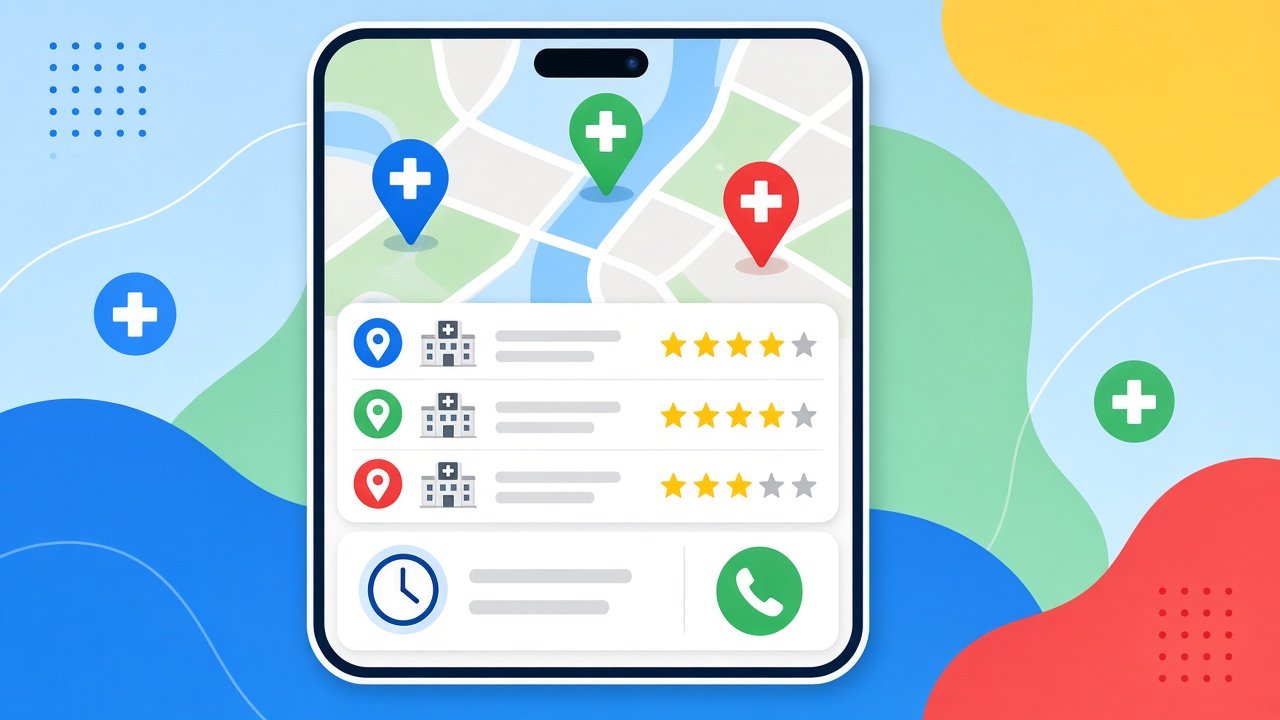
A patient in Salt Lake with a throbbing tooth rarely scrolls past the first three clinics Google Maps shows them. They glance at the ratings, check whether the clinic is open, and tap "Call". If your practice isn’t in that small box, you are close to invisible at the exact moment someone needs you.
The trouble is that most advice on Google Maps SEO for clinics lumps together things you can influence and things you can’t. This guide separates the two, so your time goes where it can actually make a difference.
Why the map pack matters so much for clinics?
Healthcare searches are local and usually urgent. "Paediatrician near me", "skin doctor in New Town", "dental clinic open now" — the person searching wants someone close, available and trustworthy.
Medical map pack ranking decides which three practices get that first look, and the pack often appears above the regular organic results. For a clinic that depends on phone bookings and walk-ins, that box can matter as much as the website itself.
The principle behind it: relevance, distance and prominence
Google states that local results are based mainly on three things:
- Relevance – how well your profile matches what someone searched for clinic relevance distance prominence.
- Distance – how far your clinic is from the searcher, or from the location named in the search.
- Prominence – how well known your clinic is, drawing on reviews, links, mentions across the web, and your website’s position in organic search.
Google also says you cannot pay for or request a better local ranking. Looking at clinic relevance, distance, and prominence through the lens of control gives a useful split:
- Distance: you can’t move your clinic for SEO, so accept it and plan around it.
- Relevance: almost entirely in your hands.
- Prominence: partly in your hands, but it builds slowly.
A step-by-step method for the factors you control
Step 1: Get the core profile right
Claim and verify your Google Business Profile. Choose the most specific primary category that fits — "Paediatrician" or "Dermatologist" tells Google far more than "Doctor" or "Medical clinic". Add secondary categories only for services you genuinely provide. Use your real-world name exactly as it appears on your signage; adding keywords such as "Best Skin Clinic Kolkata" breaks Google’s guidelines and can lead to suspension.
Step 2: Keep your details consistent everywhere
Your name, address, and phone number should match across your website, Google, Practo, Justdial, and any hospital or association directory you appear in. Small differences — an old landline, or a different building number on one site — make it harder for Google to trust that these listings describe the same place.
Step 3: Complete services, hours and attributes
List your consultations and procedures in plain language. Keep hours accurate, including special hours for Durga Puja, Diwali, and other holidays. Add an appointment link and relevant attributes such as wheelchair accessibility. A complete profile helps Google match you to more specific searches, and it helps patients decide.
Step 4: Build a steady, honest review flow
Ask patients for reviews after their visit, through an SMS link or a small card at reception. Don’t offer discounts or gifts in exchange, and don’t ask only your happiest patients — both go against Google’s review policies.
When replying, thank the reviewer and keep it general. Never confirm that someone is your patient or discuss their treatment; patient confidentiality and India’s Digital Personal Data Protection Act, 2023, both apply here.
Step 5: Strengthen your website’s local signals
Give each clinic location its own page with the same name, address, and phone number, an embedded map, the doctors who practise there, and the services offered. Add LocalBusiness or MedicalClinic structured data. Because organic search visibility feeds into prominence, a useful, well-structured website supports your map visibility.
Step 6: Keep the profile active
Upload real photos of the entrance, reception, and waiting area so first-time patients can find you. Use posts for practical updates such as vaccination camps or new consultation timings. Answer common questions about parking, insurance, and appointments.
Illustrative checklist (example only, not a client result)
Imagine a hypothetical two-doctor dermatology clinic in Behala reviewing its profile. A practical audit might look like this:
- Primary category set to "Dermatologist", not "Clinic"
- Business name matches the signboard, with no added keywords
- Phone number identical on the website, Google, and two directories
- Holiday hours added for the coming festival season
- Services listed: acne treatment, skin allergy consultation, hair loss consultation
- Review request card placed at the billing counter
- At least ten recent, real photos uploaded
- Location page with map, address, and structured data live on the website
Each line is something the clinic controls this week, without waiting on Google.
Common mistakes, limits and compliance points
A few patterns cause more harm than good:
- Keyword-stuffed names, and listings at virtual offices or addresses where you don’t see patients.
- Fake or purchased reviews, which can lead to removed reviews or a suspended profile.
- Promotional claims like "best doctor in Kolkata" or guaranteed results. Doctors in India should also check current National Medical Commission and state medical council guidance on how they present themselves publicly.
- Expecting overnight change. In crowded areas like Park Street or Ballygunge, many clinics compete for the same searches, and distance will always limit how far your visibility stretches.
Remember that this is marketing guidance, not medical advice, and no one can guarantee a ranking position.
How to measure progress and decide the next step?
Use the Performance section of your Business Profile to track calls, direction requests, website clicks, and the searches that surfaced you. Pair it with Google Search Console for your location pages. Because map rankings change from street to street, a grid-based rank tracker shows how visibility varies across the neighbourhoods you serve.
Review these monthly but judge trends over a quarter, then let the data point to your next action:
- Low impressions usually point to relevance — revisit categories, services, and profile completeness.
- Good impressions but few calls suggest a conversion problem — look at photos, reviews, and hours.
- Visibility only very close to the clinic often reflects prominence — focus on reviews, local mentions, and your website.
Final Words
Among the local SEO factors that shape your Google Maps presence, distance is fixed, relevance is mostly yours to set, and prominence grows with steady, honest effort. Get the profile accurate, keep details consistent, earn genuine reviews, and measure what changes. For a closer look at how these steps fit into a wider strategy, Doctors Branding Agency’s Local SEO for doctors page explains how the service approaches clinic visibility.
Keep reading
More from the Doctors Branding blog
-

How to Keep Clinic Business Information Consistent Across the Web?
A patient searches for a paediatrician near Salt Lake, finds your clinic on Practo, rings the number listed there and...
Read article → -

Local SEO for Multispecialty Clinics: How to Make Every Department Findable
A patient with a swollen knee in Salt Lake does not search for your clinic’s name. They type "orthopaedic doctor...
Read article → -
Why Booked Appointments and Form Leads Are Different Marketing Measures
Why form leads and booked appointments are different measures, how to track them separately and how to improve the step...
Read article →
Want this kind of thinking applied to your practice?
Start with a conversation about where your doctor, clinic or hospital marketing stands today.