
Why Booked Appointments and Form Leads Are Different Marketing Measures
Why form leads and booked appointments are different measures, how to track them separately and how to improve the step from enquiry to booking.
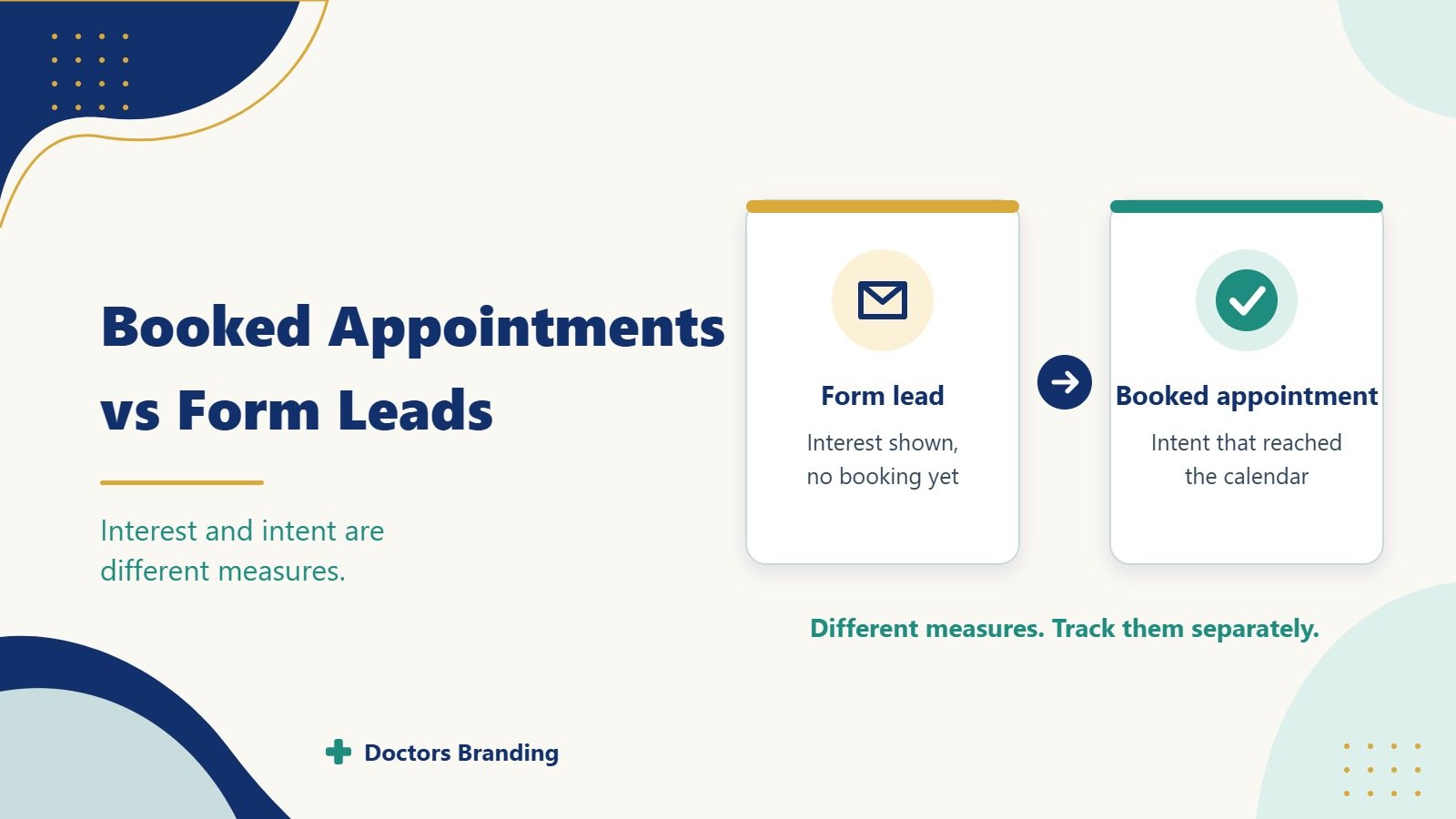
Form leads and booked appointments look similar on a dashboard. Both show interest. They are not the same measure. Treating them as equal creates false success in healthcare marketing. This how to guide explains the gap and shows how to track each one correctly under the heading healthcare leads vs booked appointment tracking.
A form lead is a name, phone number, or email left on a page. A booked appointment is a confirmed time slot on the clinic calendar. The first shows curiosity. The second shows commitment. Mixing the two numbers hides real performance.
Why the Difference Matters in Healthcare
Healthcare visitors face higher stakes than shoppers. A form fill can come from someone comparing three clinics. A booked appointment means they chose one slot and plan to appear. Healthcare leads vs booked appointment tracking reveals which campaigns actually fill the schedule.
Clinics that celebrate form leads alone often see empty chairs. The gap between leads and bookings shows where the process breaks. It also shows which channels deserve more budget.
What Counts as a Form Lead
A form lead is any completed contact form, chat enquiry, or download that captures contact details.
Common examples
- “Request a callback” forms
- New patient enquiry forms
- Symptom checker results that ask for email
- Newsletter sign ups from health pages
These actions cost little effort. Many people submit forms while still researching. Some never answer the phone. Others book elsewhere. That is why raw form counts overstate demand in healthcare leads vs booked appointment tracking.
What Counts as a Booked Appointment
A booked appointment is a confirmed future visit on the practice calendar. The patient has selected a date and time. Staff have accepted it. Reminders are set.
Clear signs of a true booking
- The slot appears in the scheduling system
- A confirmation message or email was sent
- The patient received preparation instructions
- The appointment is not marked as pending or cancelled
This measure sits closer to revenue. It is the stronger half of healthcare leads vs booked appointment tracking.
How the Two Numbers Diverge
Most clinics see a large drop from leads to bookings. The share of leads that become bookings varies widely with specialty and follow up speed.
Main reasons for the gap
- Slow response to the form (more than one hour)
- No available slots that match the patient need
- Insurance or cost questions left unanswered
- Patient still comparing other providers
- Form asked for too much information too early
Tracking both sides of healthcare leads vs booked appointment tracking makes these breaks visible. Teams can then fix the exact step that loses people.
How to Set Up Separate Tracking
Start by defining each event clearly. Then connect the tools so numbers stay clean.
Step by step setup
- Mark every form submission as a “lead” event in analytics.
- Mark every confirmed calendar booking as an “appointment” event.
- Use unique campaign codes or hidden fields so each lead can be tied to its source.
- Export weekly lists of leads that never became bookings.
- Review those lists with the front desk to learn the real reasons.
This process turns healthcare leads vs booked appointment tracking into a weekly habit instead of a monthly surprise.
Where Each Measure Belongs in Reports
Different people need different numbers.
Use form leads for
- Top of funnel campaign tests
- Content and ad creative performance
- Early awareness channels
Use booked appointments for
- Budget decisions
- Provider schedule planning
- True return on ad spend
- Front desk staffing forecasts
Mixing them in one column hides problems. Separate columns keep healthcare leads vs booked appointment tracking honest.
Common Tracking Mistakes to Avoid
Many clinics blur the two measures without meaning to.
Frequent errors
- Counting a form fill as a booking because someone called later
- Including cancelled or no show slots in the booking total
- Forgetting to remove test submissions from lead counts
- Using the same conversion goal for both events in ad platforms
- Reporting only the higher number to leadership
A clean healthcare leads vs booked appointment tracking system flags these errors before they distort decisions.
How to Improve the Conversion From Lead to Booking
Once the gap is visible, small process changes raise the booking rate.
Practical fixes
- Reply to every form within 15 minutes during open hours
- Offer two or three real time slots in the first reply
- Add a short insurance note on the form thank you page
- Send an automatic text with a booking link
- Train staff to ask one clarifying question instead of sending a long email
Each fix can be measured against the same healthcare leads vs booked appointment tracking numbers. Teams see which change moves the booking rate most.
Tools That Keep the Two Measures Apart
Simple stacks work well for most clinics.
Useful combinations
- Website forms connected to a CRM that tags source
- Scheduling software that exports confirmed appointments
- Analytics platform with two separate conversion goals
- Weekly spreadsheet that matches lead IDs to booking IDs
The goal is one source of truth for leads and another for bookings. That separation is the heart of accurate healthcare leads vs booked appointment tracking.
Reading the Numbers Week by Week
Look at three ratios every Monday.
Key ratios
- Leads per campaign or channel
- Bookings per campaign or channel
- Booking rate (bookings divided by leads)
A channel with many leads but a low booking rate needs process work. A channel with fewer leads but a high booking rate may deserve more spend. These ratios turn healthcare leads vs booked appointment tracking into clear actions.
Special Notes for Different Clinic Types
General clinics, specialty practices, and multi location groups see different gaps.
General clinics often lose people on insurance questions and same day availability.Specialty clinics lose people on wait times and referral requirements.Multi location groups lose people when the form does not show which site has open slots.
Adjust the follow up script for each type. Keep the same healthcare leads vs booked appointment tracking structure so results stay comparable.
Building the Habit Across the Team
Marketing, front desk, and providers must share the same definitions.
Simple team rules
- Marketing owns lead quality and source tags
- Front desk owns response time and booking confirmation
- Providers own slot availability notes
- Everyone reviews the two numbers together once a week
Shared language prevents arguments about “how many patients we got.” It keeps healthcare leads vs booked appointment tracking useful for the whole clinic.
Long Term Benefits of Keeping Them Separate
Clinics that track both measures make better budget choices. They stop funding campaigns that only produce form fills. They invest in channels and pages that produce real appointments. Over time the booking rate rises and the schedule fills more evenly.
The same data also improves patient experience. Faster replies and clearer next steps reduce frustration. Patients who book are more likely to arrive. Staff spend less time chasing cold leads.
Final Checklist for Clean Measurement
Use this short list each month.
- Form submissions are tagged as leads only
- Confirmed calendar entries are tagged as bookings only
- Cancelled appointments are removed from the booking total
- Every lead has a source code
- Response time is recorded for a sample of leads
- The booking rate is calculated by channel
- The team reviews both numbers in the same meeting
A living healthcare leads vs booked appointment tracking system follows this checklist. It keeps marketing honest and the schedule full.
Form leads show interest. Booked appointments show intent that reached the calendar. They answer different questions and deserve different columns. Clinics that respect the difference in healthcare leads vs booked appointment tracking waste less money and fill more chairs. Start with clear definitions. Track both events. Review the gap every week. The numbers will show exactly where to improve.
Keep reading
More from the Doctors Branding blog
-

What Patients Look For When Comparing Cosmetic Surgeons
What patients compare when choosing a cosmetic surgeon: consultation experience, recovery details, before and after photos, credentials and costs.
Read article → -

What Patients Look For When Comparing Dermatologists
How patients compare dermatologists for medical skin, hair and aesthetic care: credentials, photos, reviews, access and what practice pages should...
Read article → -

What Patients Look For When Comparing Cardiac Surgeons
How patients search for and compare cardiac surgeons: referrals, second opinions, hospital strength, reviews and the information they expect online.
Read article →
Want this kind of thinking applied to your practice?
Start with a conversation about where your doctor, clinic or hospital marketing stands today.