
How to Record Healthcare Brand Mentions Across AI Answer Experiences
How to build a query list, capture AI answers, log each mention in a tracking sheet, check accuracy and review it on a regular schedule.
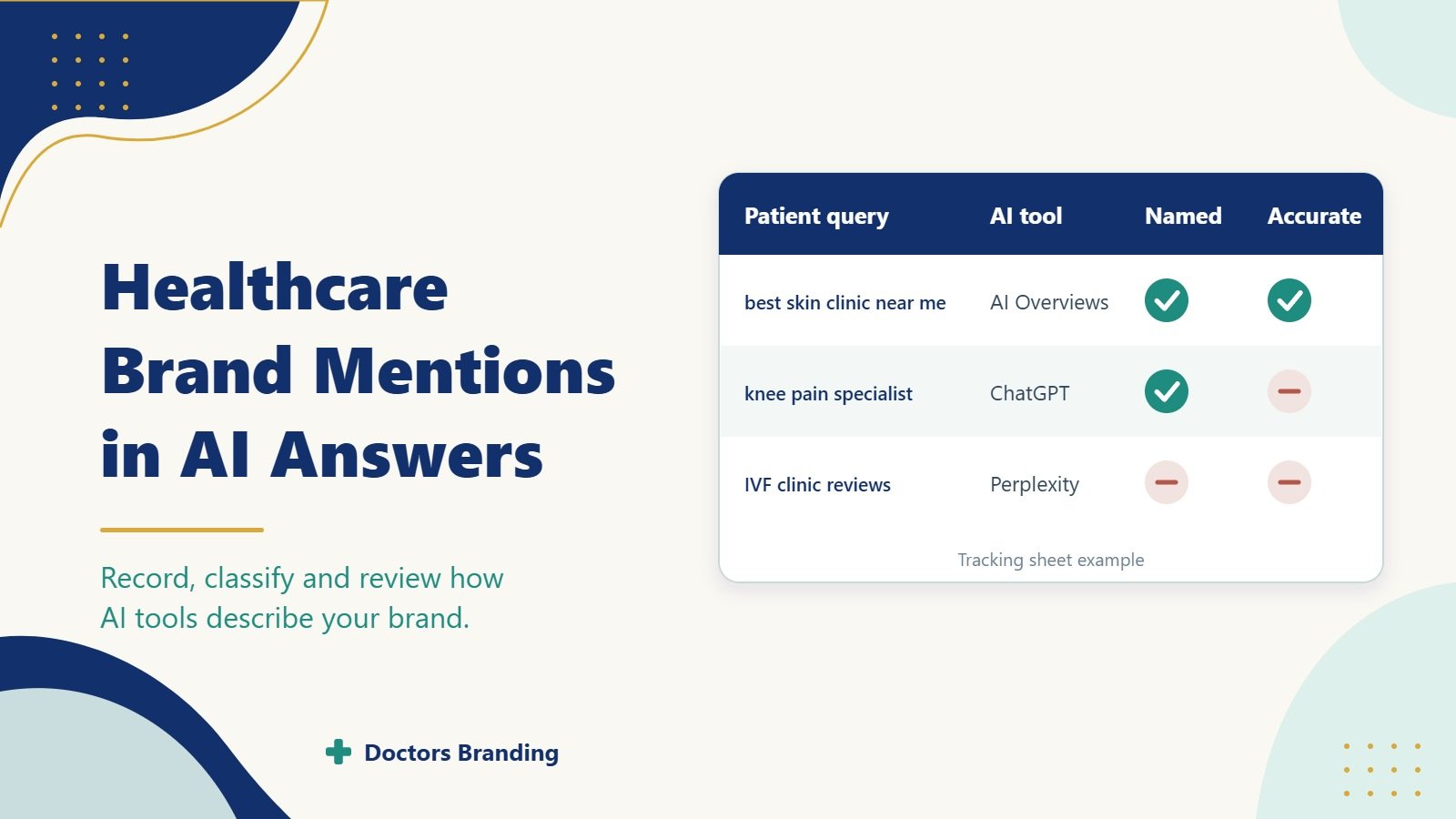
AI answer experiences now shape how patients discover clinics, hospitals, and health brands. Tools such as Google AI Overviews, ChatGPT, Perplexity, Gemini, and others often summarise options and name specific providers. Healthcare brand monitoring in AI search has become essential because these answers influence trust and enquiries before a user ever visits a website.
This how to guide shows clinics and healthcare organisations how to find, record, and review brand mentions inside AI generated answers. A consistent process turns scattered mentions into useful data for reputation and visibility work.
Why AI Answer Monitoring Matters for Healthcare
Patients ask AI tools direct questions about symptoms, treatments, and local providers. The answers frequently name brands, hospitals, or doctors. A positive or accurate mention can drive enquiries. An outdated or missing mention can send patients elsewhere.
Traditional rank tracking does not capture these answers. Healthcare brand monitoring in AI search fills the gap by recording what AI tools actually say about the brand in real patient style queries.
What Counts as a Brand Mention in an AI Answer
A mention is any clear reference to your clinic name, hospital name, doctor name, or distinctive service brand inside an AI response.
Examples include
- The brand listed among recommended providers
- A short description of services linked to the brand
- Citation of the brand website or profile
- Comparison that includes the brand
- Warning or negative note attached to the brand
Only record clear, identifiable mentions. Vague category statements do not count. This definition keeps healthcare brand monitoring in AI search accurate and repeatable.
Step 1: Build a Core List of Patient Style Queries
Start with the questions real patients ask. These queries produce the AI answers worth monitoring.
How to create the list
- Collect top questions from your website search data and enquiry forms.
- Add common local searches such as “best clinic for [condition] in [city]”.
- Include comparison queries such as “[your brand] vs [competitor]”.
- Add reputation queries such as “is [brand] good for [treatment]”.
- Review the list every month and add new questions that appear.
A focused query list is the foundation of effective healthcare brand monitoring in AI search. Twenty to forty well chosen queries usually cover the main opportunities.
Step 2: Choose the AI Tools to Check Regularly
Different tools give different answers. Monitor the ones your patients are most likely to use.
Priority tools for most healthcare brands
- Google AI Overviews (via regular Google searches)
- ChatGPT
- Perplexity
- Gemini
- Microsoft Copilot
Check each tool with the same query list. Note that answers can change by day and by user location. Record the date, tool, and approximate location for every check. Consistent tool selection makes healthcare brand monitoring in AI search comparable over time.
Step 3: Run the Queries and Capture the Answers
Perform the searches manually or with a small team so context stays clear.
Capture method
- Open the AI tool in a clean session when possible.
- Enter one query at a time.
- Read the full answer.
- Copy the exact sentences that mention your brand.
- Take a screenshot that shows the query and the relevant answer section.
- Note whether the mention is positive, neutral, or negative.
- Record any sources the AI cites.
Store everything in one place on the same day. Fresh captures prevent later disputes about what the answer actually said. This disciplined capture is central to reliable healthcare brand monitoring in AI search.
Step 4: Record Each Mention in a Simple Tracking Sheet
A shared spreadsheet or lightweight database keeps the data usable.
Recommended columns
- Date of check
- AI tool used
- Exact query
- Brand mentioned (yes or no)
- Exact quote of the mention
- Sentiment (positive, neutral, negative)
- Sources cited by the AI
- Screenshot link or file name
- Notes on accuracy
- Follow up action needed
Update the sheet after every monitoring round. Over weeks the sheet reveals patterns. Those patterns guide improvements and prove the value of healthcare brand monitoring in AI search.
Step 5: Classify Mentions for Faster Review
Group mentions so the team can act quickly.
Useful categories
- Accurate and helpful
- Accurate but incomplete
- Outdated information
- Incorrect clinical or factual claim
- Missing when the brand should appear
- Negative reputation note
Classification turns raw records into priorities. Incorrect or outdated mentions usually need the fastest response. Clear categories keep healthcare brand monitoring in AI search focused on impact rather than volume.
Step 6: Check Accuracy Against Your Own Information
Compare every mention with current, approved facts.
Accuracy review points
- Clinic or hospital name spelled correctly
- Services listed match what you actually offer
- Location and contact details are right
- Practitioner names and credentials are current
- Any outcome or quality claims match published data
- Cited sources are legitimate and up to date
Flag mismatches immediately. AI answers often pull from third party profiles, old pages, or review sites. Correcting the source usually improves future answers. This verification step protects patients and strengthens healthcare brand monitoring in AI search.
Step 7: Set a Regular Monitoring Cadence
Consistency matters more than one time checks.
Suggested rhythm
- Weekly checks for your top ten commercial queries
- Bi weekly or monthly checks for the full query list
- Extra checks after major website updates, new service launches, or public reviews
- Quarterly summary that shows mention trends
Assign one person or a small rotation to own the process. Regular cadence turns healthcare brand monitoring in AI search into a routine rather than a crisis response.
Step 8: Act on the Findings
Recording alone does not improve visibility. Action closes the loop.
Common actions
- Update your own website and Google Business Profile with clearer service facts
- Correct inaccurate third party listings that AI tools cite
- Publish fresh, well structured pages that answer the exact queries
- Respond to reviews that appear to influence negative mentions
- Share accurate short summaries that AI systems can easily reference
- Brief clinical and marketing teams on recurring errors
Track whether later checks show improved mentions. Successful actions demonstrate the return from healthcare brand monitoring in AI search.
Tools and Light Automation Options
Full automation is still limited, yet simple aids reduce manual work.
Practical options
- Shared spreadsheet or Airtable base with the columns listed above
- Browser screenshots stored in a dated folder
- Calendar reminders for each monitoring round
- Basic alerts from traditional brand monitoring tools for web mentions that may feed AI answers
- Team checklist so every query is covered the same way
Avoid over reliance on unproven AI tracking services until you have validated their accuracy against manual checks. A clean manual core keeps healthcare brand monitoring in AI search trustworthy.
Common Pitfalls to Avoid
Teams new to this work often stumble on the same issues.
Frequent mistakes
- Monitoring only brand name queries and ignoring patient questions
- Recording mentions without screenshots or exact quotes
- Checking only one AI tool
- Ignoring location settings that change local answers
- Failing to verify facts before reacting
- Letting the tracking sheet go stale for months
Each pitfall reduces the value of the effort. A short team review of the process every quarter prevents them and keeps healthcare brand monitoring in AI search effective.
How to Report Results to Leadership
Summarise findings so decisions stay clear.
Simple monthly report elements
- Number of queries checked
- Percentage of queries that mentioned the brand
- Split of positive, neutral, and negative mentions
- Top inaccurate claims found and actions taken
- Notable improvements since the last report
- Queries where the brand is still absent
Visual charts of mention rate over time help. Keep the language plain. Leadership can then support the ongoing work required for solid healthcare brand monitoring in AI search.
Special Notes for Different Healthcare Settings
Adjust emphasis by organisation type while keeping the same recording method.
Clinics and practices focus on local provider queries and consultation intent.Hospitals watch procedure and specialty queries plus reputation terms.Health systems track brand name queries across regions and note inconsistencies between locations.Digital health brands monitor condition and solution queries where they may be recommended or omitted.
The core recording steps stay identical. Only the query list and priority actions change. This flexibility makes healthcare brand monitoring in AI search scalable.
Building the Long Term Habit
Treat AI answer monitoring as part of regular reputation and visibility work. Store historical screenshots so you can show progress. Train new team members with the same query list and sheet format. Review the query list whenever patient questions shift.
Over months the record becomes a clear picture of how AI tools present the brand. That picture guides content updates, profile corrections, and patient education materials. Consistent healthcare brand monitoring in AI search reduces surprises and increases the chance that accurate, helpful mentions appear when patients ask.
Start with a focused query list. Capture exact quotes and screenshots. Record every mention in one sheet. Verify accuracy and act on problems. Repeat on a set schedule. The process is straightforward, and the insight it produces grows more valuable with every round. Clinics and healthcare brands that record these mentions systematically stay better informed and better positioned in the answers patients now trust.
Keep reading
More from the Doctors Branding blog
-
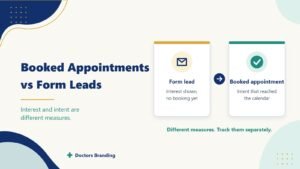
Why Booked Appointments and Form Leads Are Different Marketing Measures
Why form leads and booked appointments are different measures, how to track them separately and how to improve the step...
Read article → -
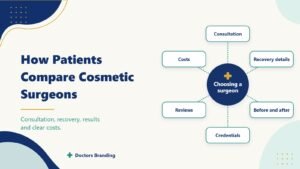
What Patients Look For When Comparing Cosmetic Surgeons
What patients compare when choosing a cosmetic surgeon: consultation experience, recovery details, before and after photos, credentials and costs.
Read article → -
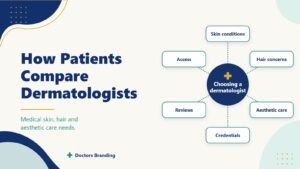
What Patients Look For When Comparing Dermatologists
How patients compare dermatologists for medical skin, hair and aesthetic care: credentials, photos, reviews, access and what practice pages should...
Read article →
Want this kind of thinking applied to your practice?
Start with a conversation about where your doctor, clinic or hospital marketing stands today.