
What Patients Look For When Comparing Cosmetic Surgeons
What patients compare when choosing a cosmetic surgeon: consultation experience, recovery details, before and after photos, credentials and costs.
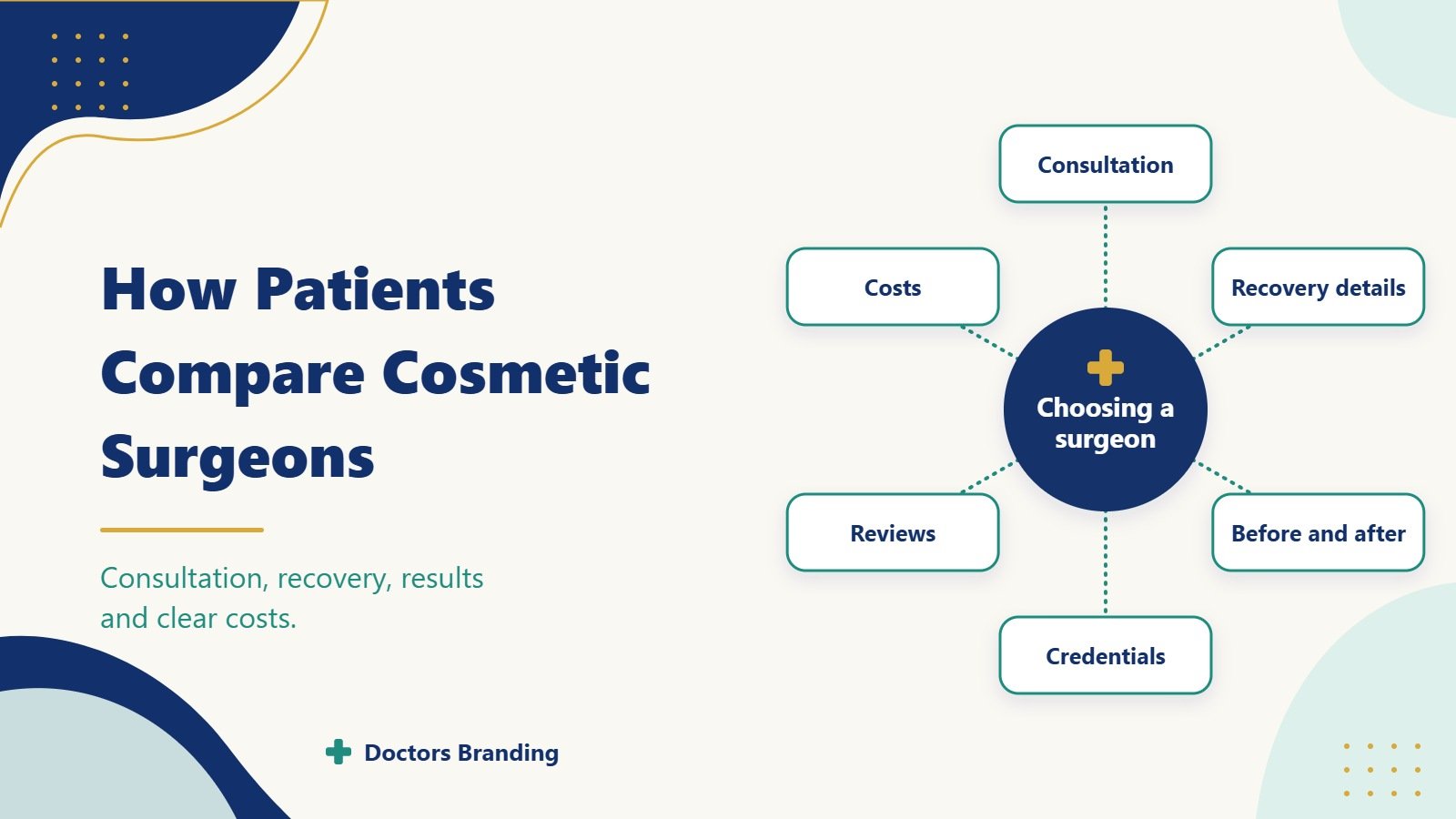
Patients comparing cosmetic surgeons focus on more than technical skill. They examine consultation style, recovery details, before and after examples, and how clearly risks are explained. Cosmetic surgeon patient search behaviour and specialist choice follows a research heavy path because the procedures are elective and the results are visible. This explainer outlines the factors that shape decisions and the information patients seek before they book.
Most people begin with a specific concern such as facial balance, body contour, or skin quality. They then search for surgeons, read reviews, study recovery timelines, and often consult more than one provider. Understanding cosmetic surgeon patient search behaviour and specialist choice helps practices present the details patients actually compare.
How Patients Start Their Research
The process usually opens with an online search that combines the procedure and location or the desired outcome. Patients quickly move to surgeon names, review sites, and photo galleries.
Common early steps
- Search for the procedure plus city or “near me”
- Open surgeon websites and look for procedure pages
- Check Google and RealSelf style reviews
- View before and after photos for similar cases
- Note consultation fees and booking process
These actions define the start of cosmetic surgeon patient search behaviour and specialist choice. Patients want to see relevant experience before they invest time in a visit.
The Importance of the Consultation Experience
The consultation is often the deciding moment. Patients judge whether the surgeon listens, explains options without pressure, and sets realistic expectations.
What they evaluate during or after the consult
- Did the surgeon ask about personal goals and lifestyle
- Were alternatives including non surgical options discussed
- Was the recommended plan matched to their anatomy
- Did they receive clear answers about scars, downtime, and risks
- Was the fee structure explained without surprise add ons
A calm, thorough consultation builds confidence. Rushed or sales focused meetings push patients to continue comparing. This personal assessment sits at the centre of cosmetic surgeon patient search behaviour and specialist choice.
Recovery Information Patients Expect to Find
Recovery details influence both choice and preparedness. Patients look for realistic timelines rather than vague promises of quick healing.
Key recovery points they compare
- Typical downtime and return to work or social activities
- Pain management approach and medication expectations
- Restrictions on exercise, travel, or sun exposure
- Signs of normal healing versus warning signs
- Follow up visit schedule and who to contact with questions
Clear recovery pages and consultation handouts reduce anxiety. Practices that publish straightforward timelines see fewer last minute cancellations. Accurate recovery content directly supports better cosmetic surgeon patient search behaviour and specialist choice.
Before and After Photos and Result Expectations
Visual proof carries heavy weight. Patients study galleries for cases that resemble their own starting point and desired change.
How they assess photos
- Consistent lighting and angles
- Similar age, body type, or facial structure
- Natural looking outcomes rather than extreme changes
- Enough examples of the specific procedure
- Honest inclusion of scar or healing stages when relevant
Galleries that feel curated and realistic earn more trust than heavily filtered sets. Patients also read accompanying notes about the techniques used. Strong visual evidence shapes cosmetic surgeon patient search behaviour and specialist choice more than general claims.
Credentials, Experience, and Safety Signals
Qualifications and facility standards matter once patients narrow the list.
Items they verify
- Board certification in plastic surgery or relevant specialty
- Hospital privileges or accredited surgical facility
- Years performing the specific procedure
- Membership in recognised professional societies
- Clear explanation of anaesthesia and monitoring
Patients cross check these details on the surgeon site and on independent boards. Missing or vague credentials often eliminate a name. Transparent safety information strengthens confidence during cosmetic surgeon patient search behaviour and specialist choice.
Reviews and Real Patient Experiences
Online reviews supply the peer perspective patients cannot get from the practice alone.
Themes that influence decisions
- Surgeon listened and did not pressure
- Staff were organised and kind during recovery calls
- Results matched the discussed plan
- Pain or swelling was managed as described
- Any complications were handled promptly and openly
Recent reviews weigh more than older ones. Patients also notice how the practice responds to critical comments. Review patterns form a major filter in cosmetic surgeon patient search behaviour and specialist choice.
Practical and Financial Comparisons
Cost and logistics affect final choice even after clinical factors align.
Points patients line up
- Total fee including surgeon, facility, and anaesthesia
- What is included in aftercare
- Consultation fee and whether it applies to surgery
- Financing options if offered
- Travel or hotel needs for out of town patients
- Wait time for the preferred surgery date
Clear pricing pages reduce friction. Hidden costs discovered late damage trust. Practical transparency keeps qualified patients moving forward in cosmetic surgeon patient search behaviour and specialist choice.
How Queries Change as Patients Narrow Options
Search behaviour evolves from broad to specific.
Typical progression
- Procedure name plus location
- Surgeon name plus “reviews” or “before and after”
- “Recovery time after [procedure]”
- “Questions to ask cosmetic surgeon”
- Comparison of two named surgeons
Content that answers each stage keeps visitors engaged. Gaps send them to other sites or review platforms. Matching this progression improves the quality of enquiries that result from cosmetic surgeon patient search behaviour and specialist choice.
Differences From Other Specialist Decisions
Cosmetic surgery choices emphasise visible results, personal aesthetic goals, and elective timing. Patients spend more time on photos and recovery stories than on pure clinical volume metrics. They also place higher value on feeling heard during the consultation. Family or partner opinions often play a larger role. These traits mean surgeon profiles need strong galleries, detailed recovery sections, and clear consultation descriptions.
Recognising the elective nature helps practices prioritise the right information. It refines how they support cosmetic surgeon patient search behaviour and specialist choice.
What High Performing Practice Pages Include
Pages that align with patient research convert more consultations.
Effective elements
- Procedure pages with realistic outcome ranges
- Dedicated recovery timelines written in plain language
- Surgeon biographies that highlight relevant experience
- Easy to view before and after galleries with consistent standards
- Transparent fee ranges or packages
- Simple path to book a consultation
- Answers to common risk and downtime questions
Short, scannable sections work better than long technical blocks. Patients should find the key facts without hunting. Well structured pages support smoother cosmetic surgeon patient search behaviour and specialist choice.
Measuring Alignment With Patient Behaviour
Practices can track signals that show whether their information matches what patients seek.
Useful indicators
- Consultation requests that mention specific procedures or photos
- Time spent on recovery and gallery pages
- Questions asked during consults about downtime or scars
- Review themes over successive months
- Percentage of consults that proceed to booking
These measures reveal gaps. Updating recovery details or gallery notes often lifts both enquiry quality and conversion. Ongoing review keeps materials current with cosmetic surgeon patient search behaviour and specialist choice.
Patients comparing cosmetic surgeons look for realistic results, clear recovery paths, thorough consultations, verified credentials, and transparent costs. They research online first, study photos and reviews, then test the personal fit during a visit. Practices that answer these points openly and early earn more confident bookings. Keep galleries honest, recovery information precise, and consultation experiences unhurried. The same details that help patients decide also build lasting trust and stronger referrals.
Keep reading
More from the Doctors Branding blog
-
Why Booked Appointments and Form Leads Are Different Marketing Measures
Why form leads and booked appointments are different measures, how to track them separately and how to improve the step...
Read article → -

What Patients Look For When Comparing Dermatologists
How patients compare dermatologists for medical skin, hair and aesthetic care: credentials, photos, reviews, access and what practice pages should...
Read article → -

What Patients Look For When Comparing Cardiac Surgeons
How patients search for and compare cardiac surgeons: referrals, second opinions, hospital strength, reviews and the information they expect online.
Read article →
Want this kind of thinking applied to your practice?
Start with a conversation about where your doctor, clinic or hospital marketing stands today.