
How to Build a Healthcare Keyword Map Without Cannibalising Service Pages?
Learn healthcare keyword mapping that keeps service pages and blog posts in their own lanes, so clinics grow content without cannibalising commercial URLs.
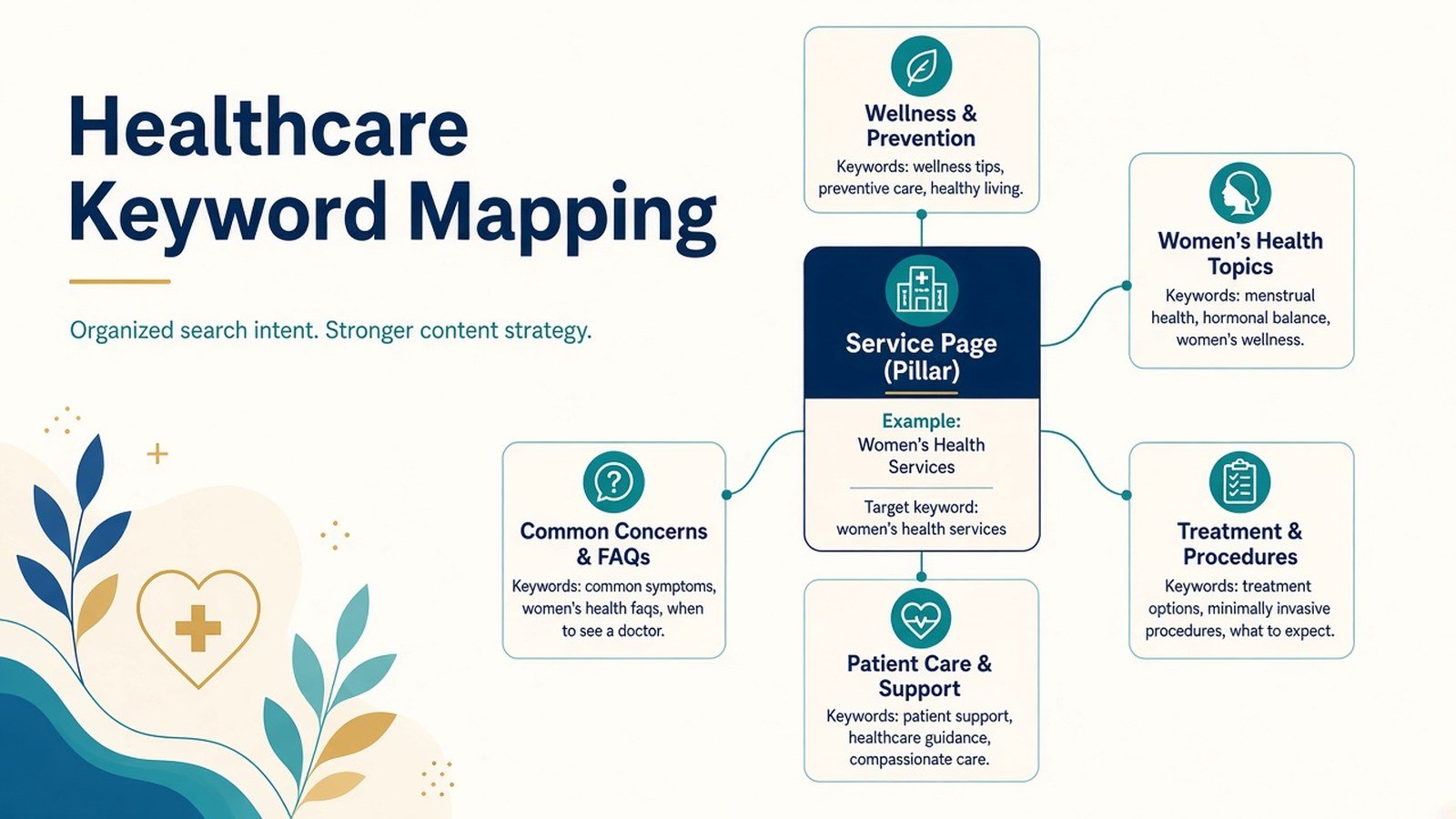
A clinic adds a new blog post about “best treatment for knee pain,” and three months later, the orthopaedics service page that used to rank on page one for the same search has slipped to page two. Nobody changed the service page. Nothing broke technically.
What happened is that two pages on the same site ended up competing for the same query, and Google picked one to show, usually not the one the clinic actually wanted a prospective patient to land on.
This is the core problem that healthcare keyword mapping is meant to solve. For clinics and hospital groups publishing both commercial service pages and informational blog content, cannibalisation isn’t a rare mistake; it’s the default outcome of writing content without a map.
Every new page is also, by definition, a vote for which query it wants to own, and without a plan, two pages can end up casting that vote for the same term. For a healthcare marketing team juggling a growing service list and a content calendar, that’s a quiet tax on rankings, ad spend, and the time already put into writing.
The Principles Behind a Cannibalisation-Proof Map
Before any spreadsheet gets built, three principles decide whether the map will hold up once content actually starts publishing.
The first is that intent, not topic, defines ownership of a keyword. Two pages can both be “about” ACL surgery without competing, as long as one targets someone ready to book a consultation and the other targets someone still researching recovery timelines. Medical keyword research that only sorts terms by subject, rather than by where the searcher is in their decision, is what produces overlap later.
The second is that service pages and blog posts play different roles, and the map should reflect that hierarchy rather than treat every page as equally weighted. A service page is the commercial anchor for a procedure or specialty; blog posts exist to support it, answering the adjacent questions a patient has before or after deciding to book, and linking back to the page that converts.
The third is that a keyword belongs to exactly one URL, recorded somewhere a writer can check before a new brief goes out. This is the single habit that prevents most cannibalisation, and it’s also the one healthcare marketing teams skip most often, because it requires maintaining a living document rather than relying on memory.
A Step-by-Step Framework for Mapping Clinic SEO Keywords
- Audit what’s already indexed. Before mapping anything new, pull every live URL and the queries it currently ranks for in Search Console. This surfaces existing overlap: a blog post and a service page already splitting traffic for the same clinic SEO keywords, before more content gets added on top of it.
- Segment keywords by intent, not just volume. Split the target list into three buckets: transactional (“dermatologist near me,” “book acne consultation”), navigational (brand and clinic-name searches), and informational (“is acne scarring permanent,” “diet and acne, what the evidence says”). Transactional and navigational terms go to service pages; informational terms go to blog content.
- Build the pillar first. Each specialty or procedure gets one service page as its pillar, targeting the highest-intent transactional phrase for that specialty. Everything else in the cluster links back to it.
- Cluster supporting content underneath the pillar. This is where healthcare content clusters earn their name: each blog post targets one informational query, links contextually to the pillar page, and never tries to also rank for the pillar’s own transactional term.
- Assign one primary keyword per URL in a shared tracker. A simple spreadsheet (URL, primary keyword, secondary keywords, intent, linked pillar) stops two writers from independently targeting the same phrase six months apart.
- Route new topic ideas through the tracker before they’re briefed. Any new blog idea gets checked against the existing map first. If it’s close to a term already owned by another page, it either gets reassigned to a genuinely different angle or merged into the existing piece instead of published as a near-duplicate.
An Illustrative Example: Mapping a Dermatology Clinic’s Cluster
To make this concrete, picture a hypothetical multi-specialty clinic in Kolkata adding a dermatology vertical. This is a constructed example for illustration, not a real client case.
The pillar page is “Acne Treatment in Kolkata,” targeting the transactional phrase directly and covering in-clinic treatment options, consultation booking, and pricing structure. Underneath it sit four supporting posts, each owning one informational query and linking back to the pillar: “Acne Scars: Home Remedies vs. Clinical Treatment,” “Does Diet Actually Cause Acne?,” “Hormonal Acne in Adults: When to See a Dermatologist,” and “How Long Does Laser Acne Scar Treatment Take to Show Results?”
None of the four titles competes with the pillar’s own phrase, and each answers a question a patient would plausibly search before deciding whether to book, which is also where the internal link back to the service page belongs, placed at the point in the post where a reader has just been given a reason to consider in-clinic treatment, not bolted onto the opening paragraph.
A quick checklist for any new piece before it’s briefed:
- Does this page have exactly one assigned primary keyword, recorded in the tracker?
- Is the intent informational (blog) or transactional/navigational (service page), and does the content format match?
- Does it link to a pillar page, and does the pillar page’s own target term stay untouched?
- Has the existing site been checked for a page already ranking on this term?
Common Mistakes, Limits, and Compliance Considerations
The most frequent mistake isn’t picking the wrong keywords: it’s skipping the tracker and trusting memory, which works until a second writer joins or six months pass. A close second is writing a blog post and then layering optimisation for the service page’s own primary term onto it “for good measure,” which is exactly the overlap the map exists to prevent.
Healthcare content carries constraints general SEO guidance doesn’t always flag. India’s National Medical Commission has tightened its position on how clinicians and hospitals may present themselves online: guaranteed-outcome language (“100% success,” “best doctor in the city”), AI-generated or synthetic patient testimonials, and before-and-after imagery used for promotional comparison are all treated as ethics violations, with penalties that escalate from a warning to licence action on repeat findings.
A keyword map that routes writers toward factual, evidence-based framing by design, rather than relying on each writer to self-censor, is a safer default than catching outcome claims in review.
Patient examples deserve the same caution. Under India’s Digital Personal Data Protection Act, any patient-identifiable detail used in content or marketing needs its own explicit consent, separate from consent given for treatment; a case study built from a real patient’s data without that separate consent is a compliance gap, not just an editorial one. This article’s own clinic example is fictional for exactly that reason.
None of this is medical advice, and none of it substitutes for a compliance or legal review before anything goes live; it’s marketing structure, not a clinical or regulatory sign-off.
Measuring Whether the Map Is Actually Working
The tracker tells you what should happen; Search Console tells you what did. Three checks are worth running monthly: whether any two owned URLs are both appearing for the same query in the Performance report (a direct cannibalisation signal), whether each pillar page’s click share for its primary term is holding steady or growing as supporting posts get published, and whether supporting posts are generating assisted clicks to the pillar rather than just standalone traffic. If a blog post outranks its own pillar page for the pillar’s intended term, that’s a signal to either merge the two or reassign the keyword, not to add more content to either one.
Where This Leaves a Healthcare Marketing Team?
Healthcare keyword mapping isn’t a one-time spreadsheet exercise; it’s a standing rule that every new page gets checked against before it’s written, not after it’s published and already competing with something else on the same site.
Clinics that treat the map as a living reference, not a document built once and filed away, are the ones that stop rediscovering the same cannibalisation problem every time the content calendar fills back up.
Teams building this out for the first time, or untangling an existing site where service pages and blog posts have already started overlapping, may find it faster to have that audit and mapping work done as part of an ongoing Healthcare SEO service engagement rather than rebuilding the tracker from scratch internally.
Keep reading
More from the Doctors Branding blog
-
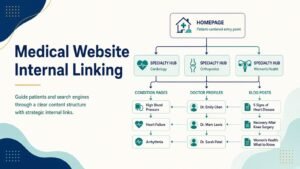
How to Improve Internal Linking on a Medical Website?
A practical medical website internal linking method: audit orphan pages, build speciality clusters, set link rules, and check patients can...
Read article → -
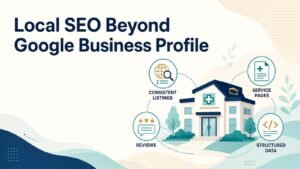
Local SEO Beyond Google Business Profile: Other Signals Doctors Can Manage
Local SEO beyond Google Business Profile: other signals doctors can manage, from consistent listings and service pages to reviews and...
Read article → -
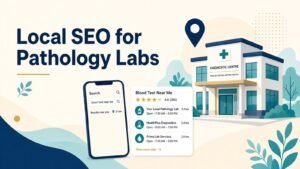
Local SEO for Diagnostic Centres and Pathology Labs
Practical local SEO for diagnostic centres: fix Google profiles, build unique lab pages, keep details consistent, and measure results for...
Read article →
Want this kind of thinking applied to your practice?
Start with a conversation about where your doctor, clinic or hospital marketing stands today.