
Medical Directory Listings: Which Citations Should a Clinic Audit?
A practical audit of medical directory listings: which clinic citations to check first, how to fix NAP consistency, and how to tell if the work paid off.
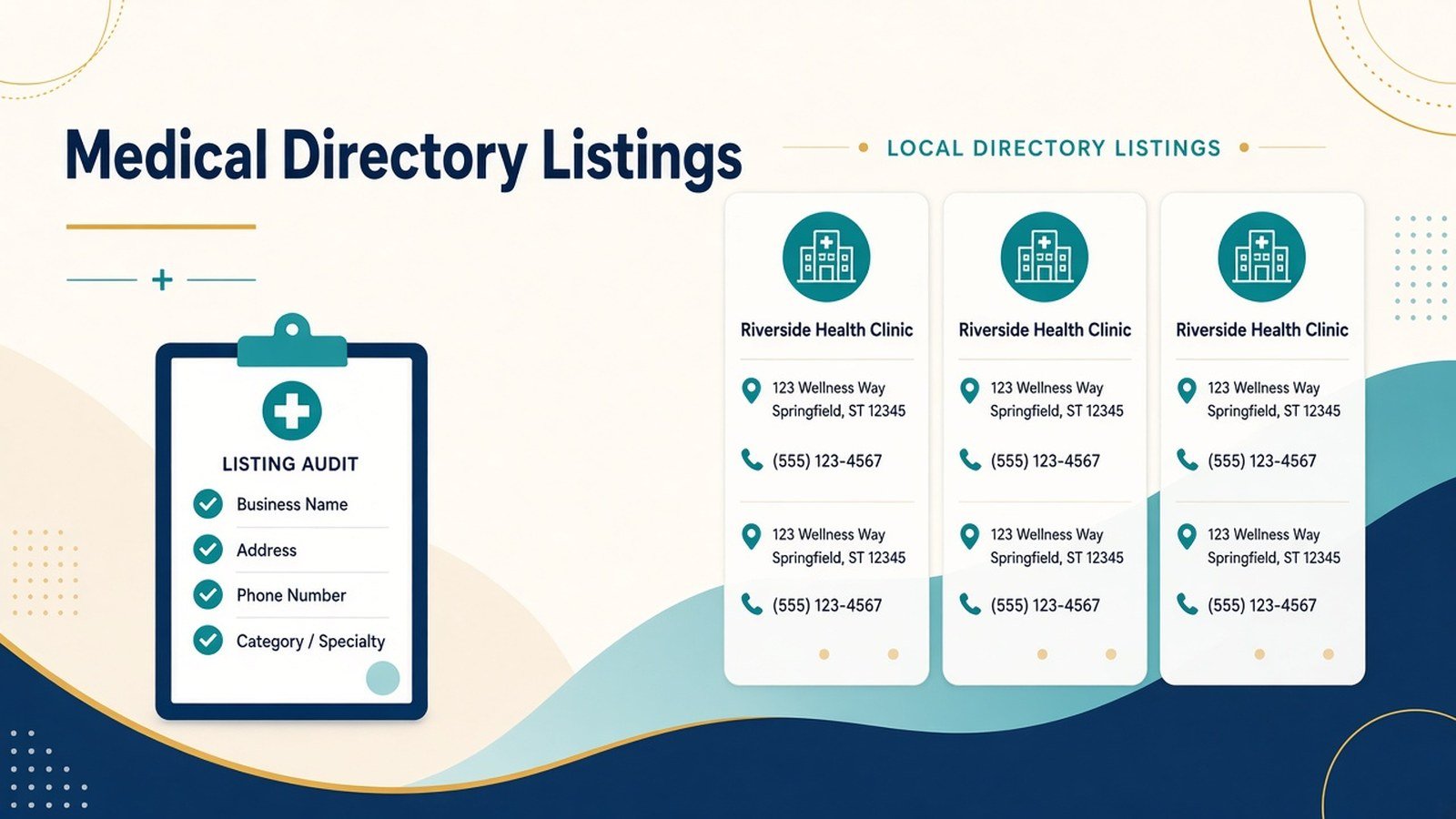
The problem: one clinic, five versions of its address
Most clinics never set out to have messy listings. It happens slowly. A doctor signs up on Practo when the practice opens, a receptionist creates a Justdial page two years later, the clinic moves one floor up, and the old landline is swapped for a mobile number. Nobody goes back to update every profile. Some were never claimed in the first place.
The result is a set of medical directory listings that quietly disagree with each other. For a patient, that can mean calling a dead number or arriving at the old building with a feverish child. For search engines, conflicting details make it harder to tell which name, address, and phone number really belong to the clinic.
Google says its local results weigh relevance, distance and prominence, and it asks businesses to keep their information complete and accurate. It does not publish a “citation score,” so no honest agency can promise that tidy listings will lift a ranking. What
clinic NAP consistency
does is remove avoidable doubt, for patients and for the systems that try to describe your practice.
This guide covers which doctor directory citations to audit first, how to run the audit, and how to tell whether the work paid off.
Which citations deserve your attention first?
Not every listing carries equal weight, and treating them all as urgent wastes a practice manager’s week. When you review medical directory listings, two questions sort them quickly: how many patients actually see this listing, and how often do other sites copy from it?
Tier 1: the sources patients and search engines lean on
- Google Business Profile, for the clinic location and for each doctor who sees patients there.
- Your own website, particularly the contact page, footer, and individual doctor pages.
- The major healthcare business listings platforms patients in India use to find and book doctors, such as Practo, plus Justdial for general local search.
Tier 2: secondary maps and directories
Bing Places, Apple Business Connect, other doctor platforms like Lybrate, and the clinic’s Facebook and Instagram profiles. Fewer patients start here, but errors still spread.
Tier 3: listings you don’t control
Hospital pages where your doctors consult, insurer or TPA network lists, and medical association directories. These go stale more often than any other group, because fixing them takes an email to someone else rather than a login. Keep a named contact for each one, so the next correction is quicker.
The rule underneath every tier
Pick one source of truth before you edit anything. Decide whether the clinic name includes “Dr.” or the brand alone, whether the phone number is the landline or the mobile, and how the floor, landmark, and PIN code are written. Every listing gets measured against that record.
For multi-doctor practices, Google’s Business Profile guidelines allow a profile for the location plus separate profiles for public-facing practitioners, each using only the doctor’s name. A solo doctor working under a clinic brand should share one profile, named in a “Brand: Doctor name” format.
A step-by-step audit method
- Write the canonical record. Clinic name exactly as it appears on signage, full address with floor and PIN code, primary phone, website URL, and hours. For each doctor, add the name as registered, qualifications, specialty, and consulting days. Google’s guidelines say the name should match real-world branding without taglines, phone numbers, or location keywords.
- Find every listing. Search the clinic name, each doctor’s name, every current and old phone number in quotes, and any previous address. Old numbers are the best way to surface profiles nobody remembers creating.
- Log each listing in one sheet. Record the platform, URL, whether you control it, and what it shows for name, address, phone, hours, and website.
- Score each mismatch. A wrong phone number or address is critical. A name variation or missing floor is moderate. Missing photos or incomplete hours are minor.
- Fix in tier order. Claim profiles where you can and edit them directly. Use each platform’s edit or suggest-a-change process for unclaimed ones. For Tier 3, send a short email with the corrected details.
- Resolve duplicates. Use the platform’s merge or removal process. Two listings for one clinic split reviews and confuse patients.
- Record what changed and when. You will need this date trail to judge results and to answer anyone who asks why a profile looks different.
Common mistakes, limits and compliance points
The most frequent mistake is adding keywords or locality names to a doctor’s profile name. It breaks Google’s naming rules and can put the profile at risk. Others we see often:
- Creating profiles for support staff, or one profile per specialty for the same doctor. Google’s guidelines rule out both.
- Starting with Tier 3 pages because they are easy to spot, while the Google profile still shows an old number.
- Expecting every change to appear overnight. Directories refresh on their own schedules.
- Treating the audit as a one-off job.
India adds its own layer. The National Medical Commission issued ethical advertising and public communication guidelines on 6 October 2026. Factual details such as name, location, contact information, services, and charges can be published.
Testimonials, before-and-after photos, and promotional success stories are not allowed outside narrow educational uses with consent. In practice, keep directory descriptions factual and avoid clinical promises. When replying to reviews, never confirm that someone is a patient or mention their treatment.
This article is marketing guidance, not medical or legal advice. Check the current text of the NMC guidelines, your state medical council’s position, and each platform’s policies before publishing.
How to measure progress and decide what comes next
Track a few simple numbers rather than a long dashboard:
- Accuracy rate: listings that match the canonical record, divided by listings audited. Recheck monthly at first.
- Open duplicates: this should trend toward zero.
- Google Business Profile performance data: calls, direction requests, and website clicks. Read these over months, as seasonal illness and holidays move them.
- Front-desk notes: how often patients mention a wrong number or address.
Keep the audit sheet as a living document. When a new doctor joins, add their row the same week, and note any older doctor directory citations that still point to a clinic they have left.
Re-audit every quarter, and immediately after any move, number change, or a doctor joining or leaving. If accuracy is high but visibility stays flat, listings are probably no longer the bottleneck. Look next at reviews, website content, and your primary category.
Summary and quick checklist
Clean medical directory listings will not make a clinic popular on their own. They make sure the patients already looking for you can reach you, and that search engines see one consistent story.
- Write one canonical record for the clinic and each doctor
- Search names, old numbers, and old addresses to find every listing
- Fix Google Business Profile and your website first
- Merge or remove duplicates
- Keep descriptions factual and free of testimonials
- Re-audit quarterly and after any change
If you want to see how citation work fits into wider search planning for a practice, the
Local SEO for doctors page
from Doctors Branding Agency sets out what that service covers.
Keep reading
More from the Doctors Branding blog
-
How to Improve Internal Linking on a Medical Website?
A practical medical website internal linking method: audit orphan pages, build speciality clusters, set link rules, and check patients can...
Read article → -

Local SEO Beyond Google Business Profile: Other Signals Doctors Can Manage
Local SEO beyond Google Business Profile: other signals doctors can manage, from consistent listings and service pages to reviews and...
Read article → -

Local SEO for Diagnostic Centres and Pathology Labs
Practical local SEO for diagnostic centres: fix Google profiles, build unique lab pages, keep details consistent, and measure results for...
Read article →
Want this kind of thinking applied to your practice?
Start with a conversation about where your doctor, clinic or hospital marketing stands today.