
How to Audit Treatment Pages Before Starting a Healthcare SEO Project
A ten-step audit for treatment pages: technical health, content, E-E-A-T, schema, linking and compliance, before you start a healthcare SEO project.
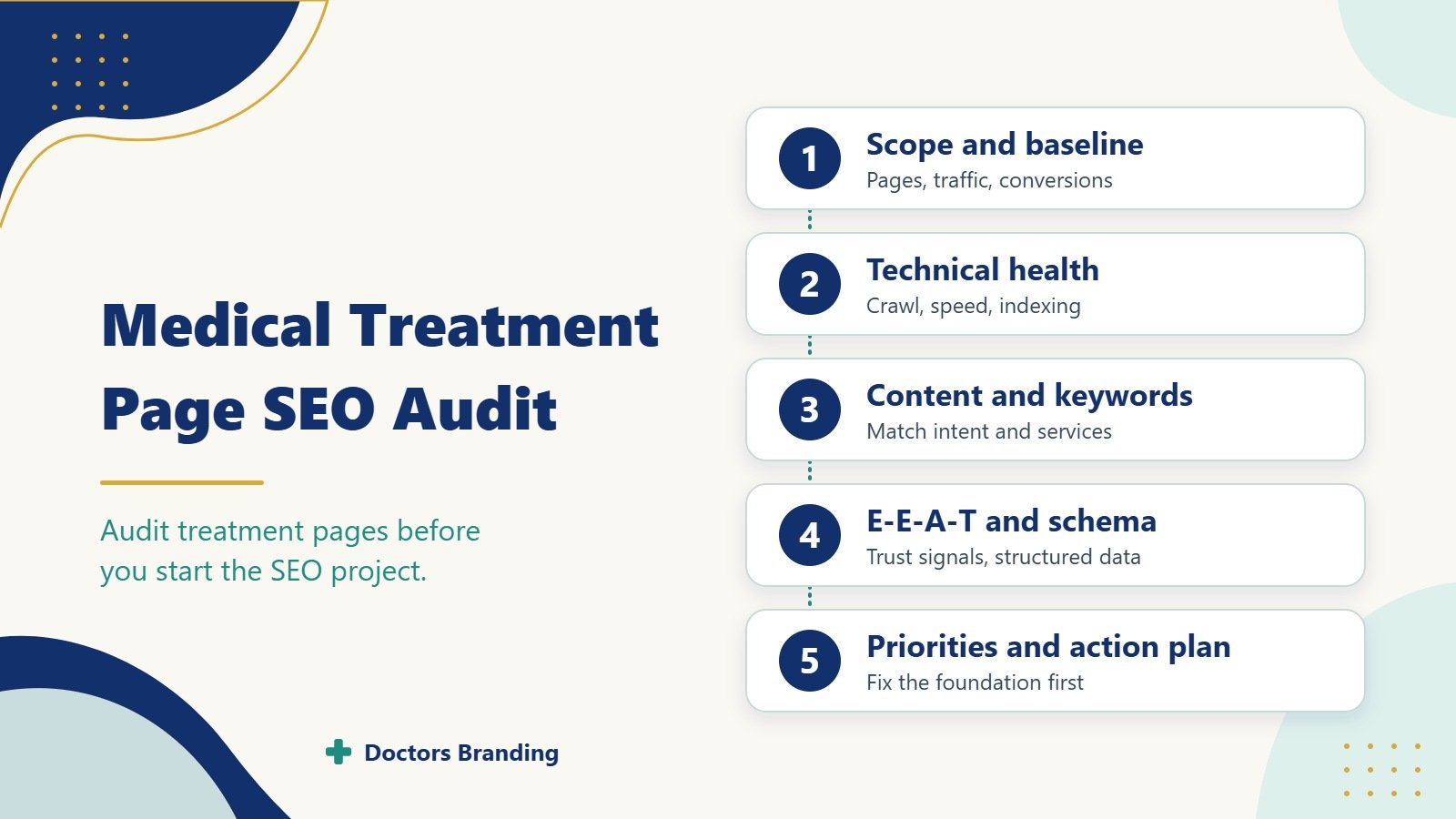
A solid medical treatment page SEO audit is the foundation of any successful healthcare SEO project. Treatment pages (think “knee replacement surgery,” “IVF treatment,” or “root canal procedure”) sit at the intersection of high commercial intent and high medical risk. Patients use them to decide whether to book a consultation, yet search engines treat them as YMYL content. Skipping a proper audit means you can waste months of effort ranking pages that Google won’t trust or patients won’t convert on.
This guide walks you through a practical, step-by-step medical treatment page SEO audit you can complete before any keyword research, content refresh, or technical overhaul begins.
Why a Medical Treatment Page SEO Audit Comes First
Healthcare sites are heavily scrutinized. One outdated claim, missing author credential, or slow mobile experience can hurt how a page is judged. A medical treatment page SEO audit surfaces these issues early so you fix the foundation instead of building on sand.
Typical problems found during audits include:
- Treatment pages that rank for the wrong stage of the patient journey
- Thin or outdated clinical information that fails E-E-A-T
- Missing or broken schema that prevents rich results
- Poor internal linking that isolates high-value pages
- Compliance gaps that create legal or advertising risk
Step 1: Define Scope and Gather Your Baseline
Before you open any tool, decide exactly which pages fall under the audit. Include every primary treatment page, related procedure pages, and supporting condition pages that drive traffic or conversions.
What to collect:
- Full list of treatment URLs (export from sitemap or CMS)
- Current organic traffic, rankings, and conversion data (GA4 + Search Console)
- Top competing pages for your primary treatment keywords
- Any existing medical review or compliance notes
Document the current performance of each page so you can measure improvement later. This baseline is essential for any medical treatment page SEO audit.
Step 2: Technical Health Check
Technical issues on treatment pages hurt both rankings and patient trust. Run a crawl focused only on these URLs.
Key technical items to review:
- Indexation status and canonical tags (avoid duplicate treatment variations)
- Page speed and Core Web Vitals (especially LCP and INP on mobile)
- Mobile usability and responsive design
- HTTPS, mixed content, and security headers
- Broken internal links or redirect chains
- XML sitemap inclusion and last-modified dates
- Robots.txt and noindex tags that might be blocking important pages
Pay special attention to large media files (procedure videos, before-and-after images) that often slow treatment pages. Fix critical technical errors before investing in content or link building.
Step 3: On-Page Content and Keyword Alignment
A treatment page must answer the patient’s questions completely while using language that matches search intent.
Audit each page for:
- Primary keyword and supporting semantic terms in title, H1, and first 100 words
- Logical heading structure (H2s for benefits, risks, recovery, cost, FAQs)
- Content depth and accuracy (compare against current medical guidelines)
- Readability and plain-language explanations of complex procedures
- Freshness signals (publication and review dates)
- Presence of unique value (surgeon expertise, technology used, outcomes data)
Check whether the page targets the right intent. A page optimized only for “what is” informational queries will struggle if most searchers want “cost,” “recovery time,” or “best doctor near me.”
Step 4: E-E-A-T Evaluation
Experience, Expertise, Authoritativeness, and Trustworthiness are non-negotiable for medical content. Google’s quality rater guidelines explicitly call out medical pages.
Look for these trust signals:
- Clear author bylines with medical credentials and links to author pages
- Medical reviewer names and review dates
- Citations to peer-reviewed sources or official guidelines
- Practice or hospital affiliations displayed prominently
- Contact information, physical address, and licensing details
- Transparent disclosure of any sponsored or commercial relationships
- Patient outcome data or real testimonials (with proper consent)
Missing E-E-A-T elements are one of the most common reasons treatment pages underperform. Strengthening them is a high-impact part of any medical treatment page SEO audit.
Step 5: User Experience and Accessibility Review
Patients are often anxious. A confusing or inaccessible page increases bounce rate and reduces conversions.
UX and accessibility checks:
- Clear, above-the-fold summary of the treatment
- Easy-to-scan sections with short paragraphs and bullet points
- Prominent, specific calls-to-action (Book Consultation, Request Cost Estimate)
- Form length and mobile form usability
- Color contrast, alt text on images, and keyboard navigation
- Video transcripts and captions for procedure explanations
- Load time under 3 seconds on 4G mobile connections
Test the page yourself as a first-time visitor. Can you understand the treatment, risks, and next steps within 60 seconds?
Step 6: Schema Markup and Structured Data
Proper schema helps search engines understand medical content and can enable rich results.
Recommended schema types for treatment pages:
- MedicalProcedure or MedicalTherapy
- FAQPage (for common patient questions)
- Physician or MedicalClinic (where relevant)
- Review or AggregateRating (only if compliant)
- BreadcrumbList
- VideoObject for any embedded procedure videos
Validate existing markup with Google’s Rich Results Test and the Schema Markup Validator. Incorrect or incomplete schema is a frequent finding in medical treatment page SEO audits.
Step 7: Internal Linking and Site Architecture
Treatment pages should receive strong internal links from relevant condition pages, blog posts, and service overview pages.
Audit linking patterns:
- Number and quality of internal links pointing to the treatment page
- Anchor text variety and relevance
- Presence of related treatment or condition links within the content
- Breadcrumb trail clarity
- Orphaned pages that receive little or no internal equity
A well-linked treatment page is easier for both users and crawlers to discover and understand.
Step 8: Competitive and SERP Analysis
Look at the top 5–10 ranking pages for your main treatment keywords.
Compare:
- Content length and depth
- Use of images, videos, and tables
- E-E-A-T signals displayed
- Presence of cost information, recovery timelines, and FAQs
- Local pack or map features (if the treatment is location-specific)
- Featured snippet or People Also Ask ownership
Identify gaps you can fill and strengths you can match or exceed. This competitive view turns a basic audit into a strategic medical treatment page SEO audit.
Step 9: Compliance, Claims, and Risk Review
Healthcare content must follow advertising regulations and avoid misleading claims.
Check for:
- Absolute guarantees (“100% success rate,” “pain-free”)
- Before-and-after photos that lack required disclaimers
- Testimonials that imply typical results
- Outdated medical advice
- Missing required disclosures
- Privacy policy and consent language on forms
Involve a medical or legal reviewer if possible. Fixing compliance issues protects both rankings and the organization.
Step 10: Prioritize Findings and Build the Action Plan
After completing the review, group issues by impact and effort.
Typical priority order:
- Critical technical and indexation problems
- Major E-E-A-T and content accuracy gaps
- On-page optimization and internal linking opportunities
- Schema, UX, and conversion improvements
- Longer-term content expansion or new supporting pages
Create a simple spreadsheet or project board with owner, deadline, and expected impact for each item. This turns the medical treatment page SEO audit into an executable roadmap.
Common Pitfalls to Avoid
- Auditing only the top 10 traffic pages and ignoring high-potential lower-traffic treatments
- Focusing solely on keywords while ignoring medical accuracy and trust
- Making changes without documenting the before-and-after state
- Ignoring mobile experience because desktop rankings look fine
- Treating the audit as a one-time event instead of a recurring process
Final Thoughts
A careful medical treatment page SEO audit removes uncertainty and gives your healthcare SEO project a clear starting point. It reveals what is already working, what is quietly hurting performance, and where the biggest opportunities lie. Teams that invest the time upfront often see faster ranking gains, better conversion rates, and fewer compliance surprises later.
Start with your highest-value treatment pages, document everything, and fix the foundation first. The rest of your SEO work will be far more effective.
Keep reading
More from the Doctors Branding blog
-
Why Booked Appointments and Form Leads Are Different Marketing Measures
Why form leads and booked appointments are different measures, how to track them separately and how to improve the step...
Read article → -
What Patients Look For When Comparing Cosmetic Surgeons
What patients compare when choosing a cosmetic surgeon: consultation experience, recovery details, before and after photos, credentials and costs.
Read article → -
What Patients Look For When Comparing Dermatologists
How patients compare dermatologists for medical skin, hair and aesthetic care: credentials, photos, reviews, access and what practice pages should...
Read article →
Want this kind of thinking applied to your practice?
Start with a conversation about where your doctor, clinic or hospital marketing stands today.